

How to photograph the Aurora Australis in Tasmania
You can photograph the Aurora Australis from Tasmania with a tripod, a wide lens, a dark southern horizon and a little luck with your phone. Your camera will often see it before you do and it will look a lot different in real life than it does the images you see on social media. Here is how to give yourself the best chance to see and capture the Aurora.
What is the Aurora Australis?
The Aurora Australis, or Southern Lights, is light made when charged particles from the sun hit the upper atmosphere. Tasmania sits far enough south that strong displays can light up the whole southern sky. Weaker ones sit low on the horizon as a soft green or pink glow.
When can you see it?
Any time of year, but winter gives you the most hours of darkness to wait in. What matters most is solar activity. When the sun is busy, the chance of an aurora goes up. When it is quiet, you can sit out all night and see nothing.
Three things need to line up:
Strong solar activity.
A clear sky to the south.
Real darkness, away from town lights and ideally without a bright moon.
How do you know when it is coming?
Watch the space weather forecasts. The Bureau of Meteorology's Space Weather Services issues aurora watches and alerts for Australia. Many Tasmanian photographers also follow local aurora groups online, where people post the moment it starts.
The Kp index is the number most people watch. The higher it is, the further north the aurora reaches. A high Kp is not a promise, though. Cloud can still ruin a strong night. A modest night can surprise you.
Where should you stand?
Face south with nothing in the way. The best spots have a clear view of the southern horizon, no street lights and something interesting in the foreground, such as a jetty, a lone tree or a line of rocks.
South-facing beaches and headlands on the south coast, the Tasman and Bruny Island are good places to start. Local hotspots are Howden Boat Ramp, Tinderbox Jetty, Mt Nelson Signal Station, Bruny Island Neck lookout and the Bruny Island Lighthouse.
Always scout your spot in daylight. Cliffs, tides and slippery rocks are much harder to judge in the dark so be careful out there.
What camera settings work?
Start here, then adjust:
Mode: Manual.
Lens: as wide as you have, ideally 14 to 24mm.
Aperture: the widest your lens allows, f/1.4 to f/2.8.
ISO: 1600 to 6400, depending on how bright the display is.
Shutter speed: 2 to 15 seconds. Use shorter times when the aurora is bright and moving fast, so the curtains and beams stay sharp.
Focus: manual. Use live view, zoom in on a bright star and turn the ring until it is a sharp point.
White balance: around 3500 to 4000K, or shoot RAW and set it later.
File format: RAW, so you can edit later.
Stability: a solid tripod plus a two-second timer or remote. Switch image stabilisation off.
Take a test shot and look at the back of the camera. If the sky is too dark, raise the ISO or lengthen the exposure. If the stars start to trail, shorten it.
Why can the camera see it when I cannot?
A camera sensor collects light for seconds at a time. Your eyes do not. On a weaker night, the aurora can look like a faint grey haze to your eyes and a band of green and pink on the screen. Take test shots toward the south even when you can see nothing. That is often how you find out it has started.
What should you bring?
A head torch with a red light setting, so you keep your night vision.
Spare batteries. Cold drains them fast. Keep them in an inside pocket.
Warm layers, a beanie, gloves and something waterproof.
A thermos. It can be a long wait.
Photograph it with us
Night photography is part of every multi-day tour we run. On our Bruny Island tour we turn our cameras to the night sky from our accommodation, looking for the Milky Way and, if the conditions line up, the Aurora Australis. We cannot promise an aurora. Nobody honestly can. We can promise you will know exactly what to do if it arrives.
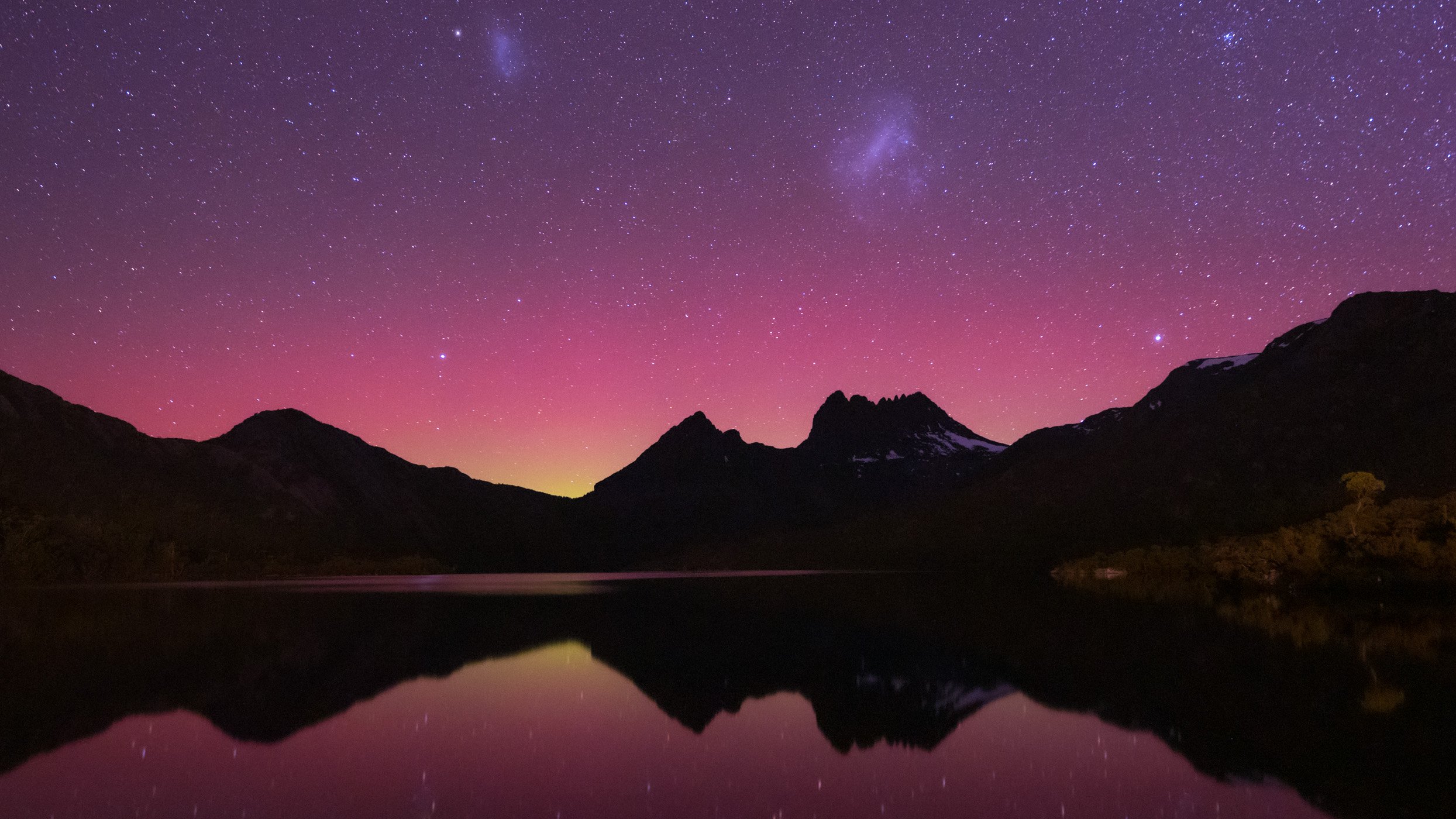
Cradle Mountain Aurora, note the lovely Magellanic clouds.
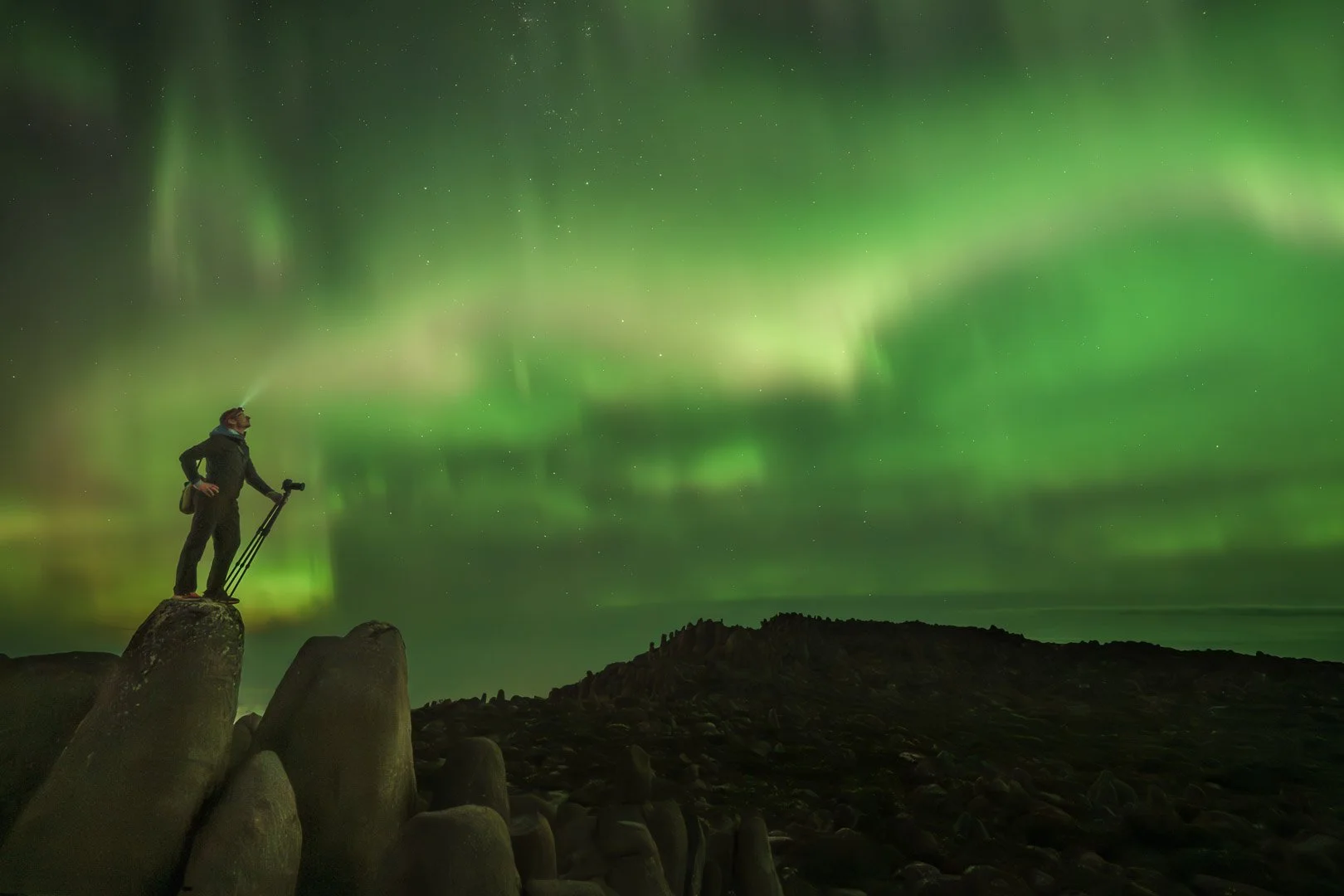
Kunanyi/Mt Wellington Aurora - captured during a larger storm in 2026